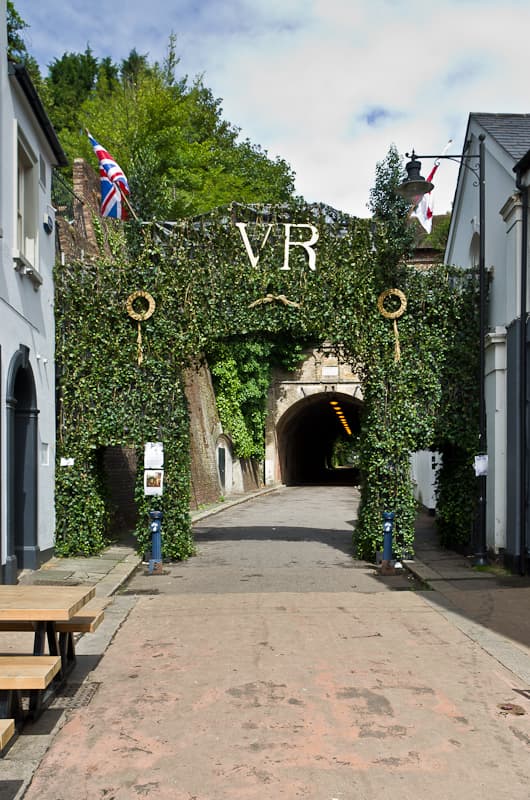
A Short History of Reigate: Castle, Caves and Market Town
From a Norman castle and its hidden caves to a Georgian market town — a brief history of Reigate.
Reigate has a history stretching back to Saxon and Norman times, and much of its layout still reflects its origins as a medieval market town.
The castle
Reigate Castle was built by the de Warenne family, probably in the late 11th or early 12th century, on high ground above what is now the town. Little of the stonework survives above ground, but the castle motte and grounds remain as a public garden. In 1777 the folly gateway was built in the grounds to evoke the memory of the medieval castle.
The caves
Beneath the castle grounds lies a network of sandstone caves and passages, including the Baron's Cave. Tradition links the caves with barons meeting before Magna Carta, though most of the tunnelling relates to the later quarrying of the soft local sandstone. The caves are opened to visitors on selected days.
Market town and priory
Reigate was granted market rights in the Middle Ages, and the market place — now the area around the Old Town Hall — was the commercial heart of the town. Reigate Priory, founded in the 13th century, lay just to the south and later became a country house and then a school.
Georgian and Victorian growth
The Old Town Hall was rebuilt in 1728, and the town expanded in the Georgian and Victorian periods, particularly after the arrival of the railway in the 19th century, which also spurred the growth of neighbouring Redhill.
Sources: Reigate Society; Reigate Priory Museum.
Share this article